Call wine storage near me, and we will advise you on any questions.
The wines being marketed today v bar with wine storage are often young vintages due to various factors, including lower-yielding harvests, changing consumption patterns, rising expenses, etc. To acquire complete maturity and impart all of its scents to the fortunate people who will appreciate its flavour in the future, a superb Grand Crus nevertheless merits being matured for a few years.
To ensure the correct aging of the priceless liquid and to protect your investment, you would need to go by a few regulations, whether you were to purchase a renowned Bordeaux or an obscure limited edition Californian wine, to age it to perfection. To determine the ideal time to drink wine, wine storage Toronto you must have at least a basic understanding of how to store wine correctly.
Remember that wine is a living thing that changes due to repeated exposure to the outside air, which progressively seeps through its cap to give the wine the ability to “breathe.” Therefore, several factors must be considered when choosing the ideal circumstances for maturing wine. If you pay close attention to the following recommendations, your basement will provide you with years of enjoyment.
Exposure to light
Wine should be protected from light as it can have adverse effects on the flavour, which is one of the many reasons we traditionally kept it buried underground in dark glass bottles like a vampire resting in a coffin.
Brief exposure to light won’t harm the contents of your bottles. However, if you intend to mature your wines for a few years, you must take extra care to shield them from too much light. Light exposure is highly damaging; prolonged exposure to incandescent or direct sunlight can negatively affect the natural phenol in wine, changing the chemical responsible for the beverage’s flavour. Therefore, wine has to be shielded from light and its harmful effects. Indeed, it is best to avoid UV radiation because it speeds up wine oxidation processes. Infrared light, on the other end of the optical spectrum, will heat your wine and must be avoided.
Now what?
First, try not to overreact: the chemical structure of most wines is not altered by a few months of moderate light exposure. When we consider it, this is a good thing since. Otherwise, most wine shops would be factories built to ruin wine!
However, if you want your wine to mature for many years, you must take precautions to avoid prolonged light exposure or block light’s harmful aspects. To save energy, warm white light bulbs with low radiation and little heat should be installed in your cellar today. Only turn them on when you need to fetch or store a bottle. Even better, you should spend your money on specially designed glass panels that can block UV and radiation. The “Glass Walls,” built by companies like The Wine Square, a Canadian business specializing in creating custom glass cellars, offer total light protection while showcasing your wine collection like an exhibition.
We advise keeping expensive, ancient wines (older than 15 years) in a wooden container to keep them safe from deterioration. Likewise, the light should be kept away from wine since it might have dire consequences. UV radiation can also be blamed for the taste of light while speeding up wine oxidation processes.
Air calibre
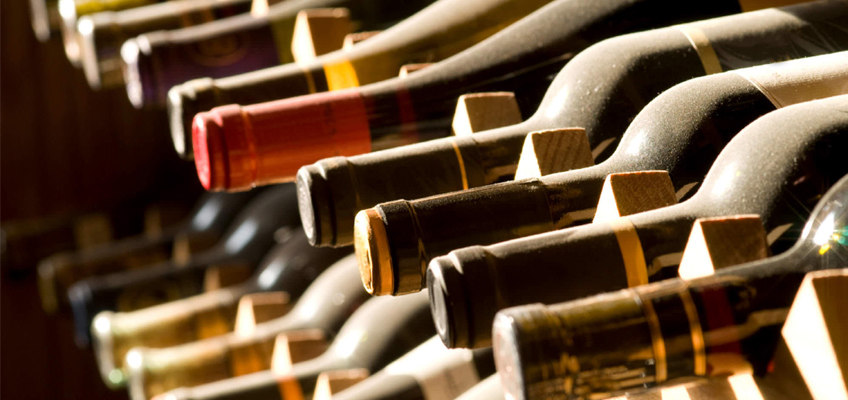
Wine connects with its environment through the porous cork. Keep dangerous materials away from your cellar, and keep scents in the space to an absolute minimum. Any odour that lingers for a while may be absorbed by the cork and harm the wine’s quality. Storage of foods like potatoes and onions is strictly prohibited.
Place the bottles on prefabricated vaults or shelves, preferably made of pumice or terracotta (these materials will help you regulate the humidity). If adequately coated against moisture, you may use metal or wooden shelves; nevertheless, stay away from cardboard since it will rapidly become wet with water.
Moistness levels
Aeration and humidity go hand in hand since a poorly aired space frequently gets too humid, and fungus grows fast.
The hygrometry should ideally be between 60% and 80% to prevent the cork from drying out and losing moisture. Be aware that leaving this group might present significant issues you must avoid at all costs. Excessive humidity will harm the bottle label and cause the cork to rot. On the other hand, if the level is too low, the pin may dry up, and the liquid may spill. Remember to purchase a hygrometer to ensure the humidity is kept at the proper level. The level of moisture specified before may be preserved with the use of a wine cooling system.
Temperature
Stable temperatures must be maintained during wine development to delay early oxidation, which quickens wine aging.
Maintaining temperatures between 10 and 14 °C, similar to those in a European castle’s “cave à vin,” is required. Maintain the cellar’s temperature as consistently as you can. The actual temperature is not that significant; most famous natural underground wine cellars reach 18 to 19°C in the summer. The secret to success is preventing significant or abrupt temperature changes, which shouldn’t be disregarded. Never expose the wine to heat shock since doing so might upset its delicate balance. Therefore, it is crucial to give the cellar appropriate isolation. Between R-20 and R-30 should be the insulation rating.
You may also think about a more sophisticated system like The Cube °, a ground-breaking innovation that will regulate the temperature and humidity of your wine cellar. The Cube ° is the first wine cellar refrigeration system on the market that uses e-cool technology to maintain stable cellar temperatures with changes as tiny as 0:01 °C.
The Bottles
You might be shocked to hear that the size of the bottle affects how quickly something ages. Half bottles, for instance, deteriorate more rapidly than conventional bottles because there is more air in contact with the wine in a half bottle relative to its volume of liquid than in a 750 ml bottle. Therefore, the aging of half bottles is not recommended. Magnums and other large bottles help retain a “young” wine for longer.
Always keep the wine bottle on its side to keep the cork hydrated and from drying out. If it retracts as a result, too much air will travel through. This would speed up the wine’s oxidation. Additionally, it’s essential to keep the bottles from vibrating while resting and move them about to prevent degradation. If you use standing wine racks for this purpose, provide their feet with rubber padding or plastic wedges to reduce vibrations.